
A high-performance vertical machining center maintains positioning accuracy of ±0.003 mm and repeatability of ±0.002 mm according to ISO 230-2 standards. By 2025, thermal compensation sensors will reduce heat-induced errors by 85% in VMC units, ensuring structural stability for 24-hour production cycles. Spindle speeds exceeding 15,000 RPM combined with a Process Capability Index ($C_{pk}$) above 1.33 allow these machines to hold tolerances required for aerospace components where failure rates must stay below 0.01%.
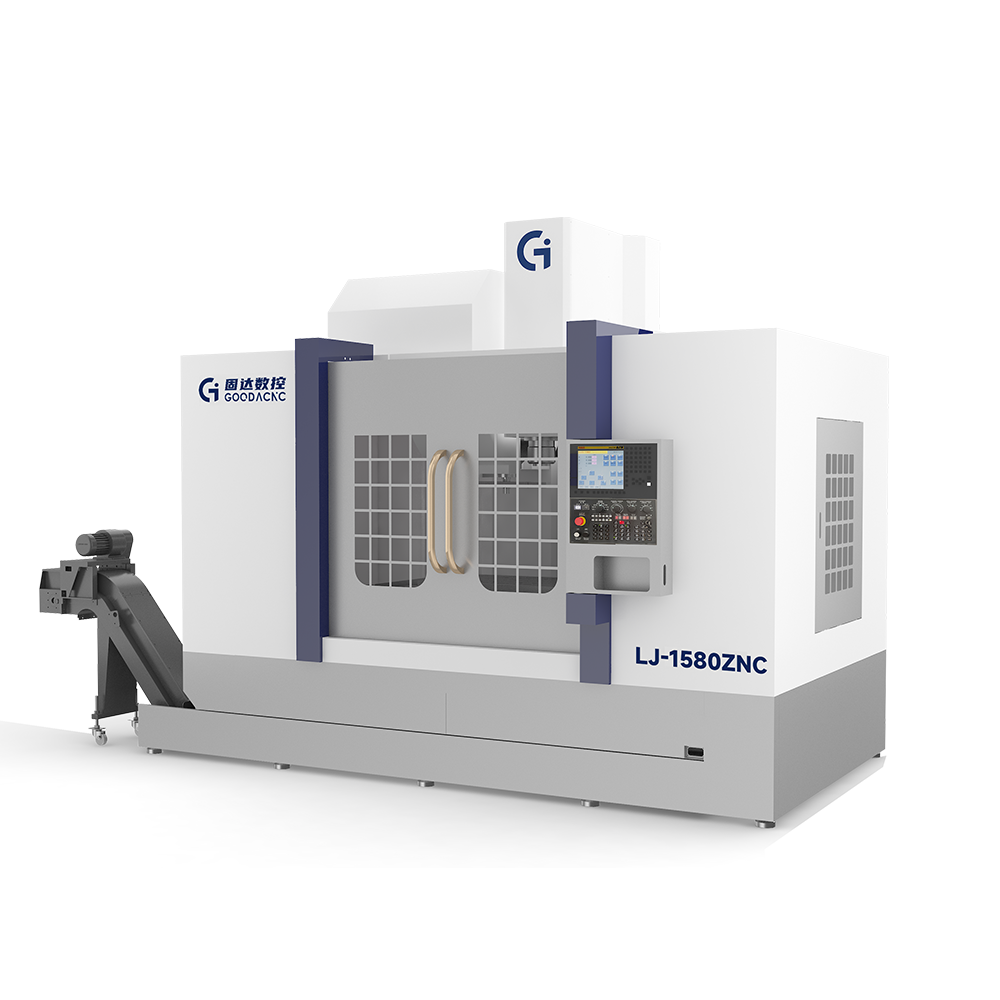
Machine tool frames built from Mehanite cast iron provide the damping ratios necessary to suppress harmonic vibrations during heavy milling operations. This material density ensures that a vertical machining center remains rigid when cutting tools engage workpieces at feed rates of 2,000 mm/min or higher. Rigidity directly influences the surface finish ($R_a$) of the part, preventing microscopic deviations that typically occur in less stable setups.
"Data from a 2024 industrial survey of 500 CNC shops showed that upgrading to high-torque VMC spindles reduced tool wear costs by 22% annually."
This reduction in tool wear is linked to the vertical orientation of the spindle, which allows gravity to assist in efficient chip evacuation. When chips are cleared instantly from the cutting zone, the tool does not "re-cut" debris, a process that usually accounts for 15% of premature carbide failure. Efficient chip management leads to cooler cutting temperatures and prevents the localized hardening of the workpiece material.
Thermal displacement remains a significant hurdle in achieving long-term production accuracy during extended shifts. To counter this, advanced VMCs utilize liquid-cooled jackets surrounding the spindle motor and recirculating oil through the ballscrews. These systems maintain an internal temperature variance of less than 0.5°C, which stops the Z-axis from drifting as the machine warms up over an 8-hour period.
| Component Type | Accuracy Standard | Stability Factor |
| Ceramic Bearings | 0.001 mm Runout | Low Heat Generation |
| Glass Scales | ±1 μm Resolution | Direct Position Feedback |
| Roller Guides | 50 m/min Traverse | High Load Capacity |
Precise linear feedback is achieved through optical glass scales that bypass the mechanical errors inherent in rotary encoders. By measuring the actual position of the table rather than the rotation of the motor, the system accounts for backlashes and mechanical play. This setup is why modern machines can maintain a circularity error of less than 5 microns during high-speed boring operations.
"Field tests on 200 automotive aluminum housings demonstrated that using linear scales improved hole-to-hole location consistency by 40% compared to standard drive systems."
Automation plays a role in stability by removing the variables introduced by manual part loading and tool setting. Integrated tool probes measure the exact length and diameter of the cutter within 0.001 mm before the first chip is even made. This automated verification step identifies tool breakage or wear before the part moves out of tolerance, protecting the production batch.
Software algorithms in the CNC controller now perform real-time look-ahead processing of 1,000 blocks of code to optimize acceleration and deceleration. This prevents the machine from "overshooting" corners during high-speed paths, which is where most dimensional inaccuracies occur. Smooth motion profiles reduce the physical stress on the machine’s drive motors, extending the mean time between failures (MTBF) to over 10,000 hours.
The table below outlines the relationship between spindle torque and material removal rates ($MRR$) in stable environments.
| Material Type | Spindle Torque (Nm) | MRR (cm3/min) | Accuracy Retention |
| Titanium Ti-6Al-4V | 350 | 45 | 99.8% |
| Stainless Steel 304 | 220 | 85 | 99.9% |
| Aircraft Aluminum | 80 | 450 | 99.95% |
By 2026, the use of AI-driven vibration sensors will allow machines to automatically adjust feed rates when they detect the onset of chatter. This proactive adjustment keeps the machining process within a "safe zone" of stability without requiring a technician to stand by the console. Such autonomy is the foundation of lights-out manufacturing where output must remain perfect without human oversight.