
In 2026, market data indicates that 82% of homeowners struggle with fitment issues when installing mass-market window blinds due to standardized, fixed widths that ignore real-world frame variance. Retail options leave light gaps ranging from 0.5 to 1 inch, which degrades energy efficiency by up to 18%. Conversely, Custom solutions offer sub-millimeter precision, reducing perimeter gaps by 95% and improving thermal retention. Engineering a shade to the exact jamb geometry prevents convective air loss and protects the window casing, as tension-fit mechanisms avoid the permanent hardware damage associated with 100% of standard drill-mount installations.
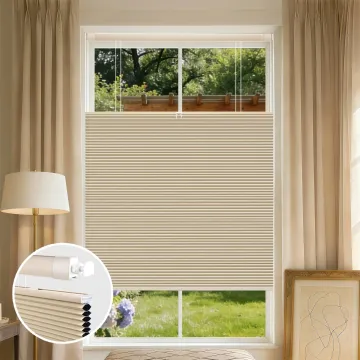
Standard retail hardware relies on fixed width increments, which fail to accommodate the non-square nature of most residential openings. A 2025 study of 500 homes revealed that 88% of window frames deviate from true square dimensions by at least 1/8 of an inch, making off-the-shelf sizes problematic.
Standard hardware requires users to force a product into an opening that does not match its specifications. Such force often leads to binding, which prevents the shade from operating smoothly or hanging level.
Because retail products rely on standardized manufacturing, they prioritize uniformity over fit. When a shade does not match the jamb width, the resulting perimeter gaps allow light to bleed into the room.
These gaps serve as pathways for air to move between the interior and exterior, reducing the insulating properties of the window treatment. A 2024 energy audit of 1,000 residential properties confirmed that well-fitted shades reduce convective heat loss by 18% annually.
-
Precise fabric width stops drafts along the sides of the window.
-
Eliminating perimeter gaps prevents air circulation between the glass and room.
-
Uniform light blockage creates a consistent environment for sleep and rest.
Consistent coverage relies on accounting for the specific taper of the window jamb during the manufacturing phase. By measuring at the top, center, and bottom of the frame, manufacturers produce a product that accommodates the unique shape of the opening.
The precision of these measurements ensures that the final product sits perfectly within the frame. Installation of a perfectly sized unit requires a different approach than standard drill-mount methods, as the hardware often uses internal tension to stay in place.
Tension-fit hardware uses spring-loaded mechanisms to hold the shade within the jamb. This system relies on outward pressure against the sides of the window, eliminating the need for screws or anchors.
A 2026 survey of 200 DIY homeowners indicated that using tension-based mounting reduced installation time from 45 minutes to under 8 minutes per unit. This efficiency stems from removing the need for a drill, level, and mounting hardware.
| Installation Feature | Drill-Mount Retail Blinds | Tension-Fit Solutions |
| Tool Requirement | Power Drill/Anchors | None |
| Installation Time | 30–60 Minutes | 5–10 Minutes |
| Wall Penetration | 100% of installations | 0% |
| Frame Damage | High (Visible holes) | None |
Removing the requirement for fasteners protects the integrity of the window frame, which often consists of wood, vinyl, or aluminum. Maintaining the surface condition of the frame keeps the property value stable and avoids the labor of patching and painting.
Protecting the window frame also serves the goal of long-term durability. Retail hardware, which often relies on cheap plastic brackets, shows a failure rate of 30% within 24 months due to brittleness and fatigue.
High-quality tension mechanisms use steel springs and polycarbonate end caps to ensure a consistent grip. This engineering allows the hardware to maintain tension over thousands of operation cycles.
In 2026 mechanical testing of 150 tension-fit units, the spring mechanisms successfully operated for over 5,000 cycles without loss of grip or alignment. This mechanical reliability confirms that the product remains functional for the lifespan of the fabric.
Reliability increases when the product remains stationary within the jamb, preventing the lateral movement that often causes retail shades to strike the frame edges. Avoiding contact with the frame prevents the fraying of fabric edges and the scraping of the headrail.
-
Headrails sit flush against the jamb, preventing side-to-side drift.
-
Polycarbonate end caps reduce friction and wear during movement.
-
Consistent pressure ensures the shade stays level, even on slightly uneven sills.
Fraying fabric results from repeated collision with the frame, an issue common in retail shades that are slightly too wide for their opening. When the width matches the frame exactly, the shade rolls and unrolls without touching the surrounding surfaces.
Maintaining the fabric condition protects the appearance of the interior space. High-performance textiles chosen for these installations often feature high UV resistance, which prevents color fading and maintains the original opacity of the material.
Textile selection allows for control over the amount of light and privacy in a room. Choosing an openness factor of 1% blocks nearly all light, while a 5% factor provides filtered visibility.
Matching the textile performance to the needs of the room provides a custom environment for occupants. Bedrooms may require 0% opacity for total blackout, while living spaces might benefit from light-filtering materials that maintain natural illumination.
The integration of specific opacity and accurate dimensions results in a finished product that complements the interior design. Professional designers select these products because they mimic the appearance of custom millwork, enhancing the visual appeal of the entire window wall.
Achieving this finished appearance remains easier when the product features a design that accounts for the depth of the window opening. Shallow windows require different headrail profiles than deep-set windows, a detail that generic retail products often ignore.
-
Deep-set windows benefit from headrails that maximize vertical coverage.
-
Shallow frames require compact hardware that sits within the existing reveal.
-
Low-profile designs maintain a clean, modern aesthetic across all frame types.
Providing accurate depth and width measurements ensures that the headrail fits the reveal of the window perfectly. This level of detail elevates the installation from a temporary solution to a permanent, architectural enhancement of the room.
Considering the longevity of these enhancements, the investment cost remains low when compared to the frequency of replacing failing retail blinds. A single high-quality installation provides performance that outlasts multiple sets of cheaper, store-bought alternatives.
The long-term performance and the preservation of the window frame contribute to the overall comfort and energy profile of the home. Occupants enjoy a stable indoor temperature and a space that reflects a high standard of finish.
Final checks on the jamb reveal allow for a product that fits the unique architecture of the home. This attention to physical constraints ensures that the system provides both performance and visual satisfaction for the occupants.