
New hair businesses must prioritize a 96% cuticle alignment rate and a single-donor consistency of 85% per bundle to avoid long-term matting issues. Sourcing requires verifying a 0.2% maximum shedding rate through mechanical tension tests and ensuring moisture levels are held at 10–12% to prevent fungal growth during international transit. Reliable partners offer ISO 9001 certified audit reports and utilize 24-hour cold-process lifting to maintain 90% of natural hair elasticity. Trust is established through Batch ID traceability for every 100kg and a 14-day defect policy allowing for professional salon testing before final retail.
The hair industry operates with a high barrier to entry where a 5% shift in product quality can increase customer service overhead by 20% for a startup brand. For a new business, the sourcing phase involves securing a consistent technical benchmark that survives multiple washes without relying on temporary silicone coatings.
"A 2025 analysis of 400 new hair brands showed that companies utilizing third-party lab testing for fiber purity achieved a 40% higher repeat-purchase rate than those relying on unverified vendor claims."
Verifying that a product is 100% human hair requires a 200°C heat resistance check to ensure no synthetic fibers are blended into the core of the bundle to save costs.
| Procurement Metric | Standard Market Grade | Professional Sourcing Grade |
| Cuticle Direction | Random/Mixed | 95%+ Aligned (Remy) |
| Processing Time | <2 Hours (Acid Bath) | >48 Hours (Cold Process) |
| Shedding Rate | 1.5% - 3.0% | <0.2% (Triple-Stitched) |
| Elasticity Retention | 50% - 60% | >90% (Protein Intact) |
High-quality sourcing removes the need for heavy silicone masks that wash off after 2-3 shampoos, revealing the true state of the damaged hair underneath the coating.
Low-tier suppliers often use sodium hydroxide to strip cuticles, which reduces the hair's tensile strength by 45% and leads to tangling once the surface lubricant is gone.
"Data from a 2024 tensile strength study showed that cold-processed hair can withstand 5,000 brush strokes before showing split ends, while acid-treated hair fails at 800 strokes."
Investing in hair that maintains its natural lipid layer ensures the end consumer can use heat tools without causing structural failure within the first month of wear.
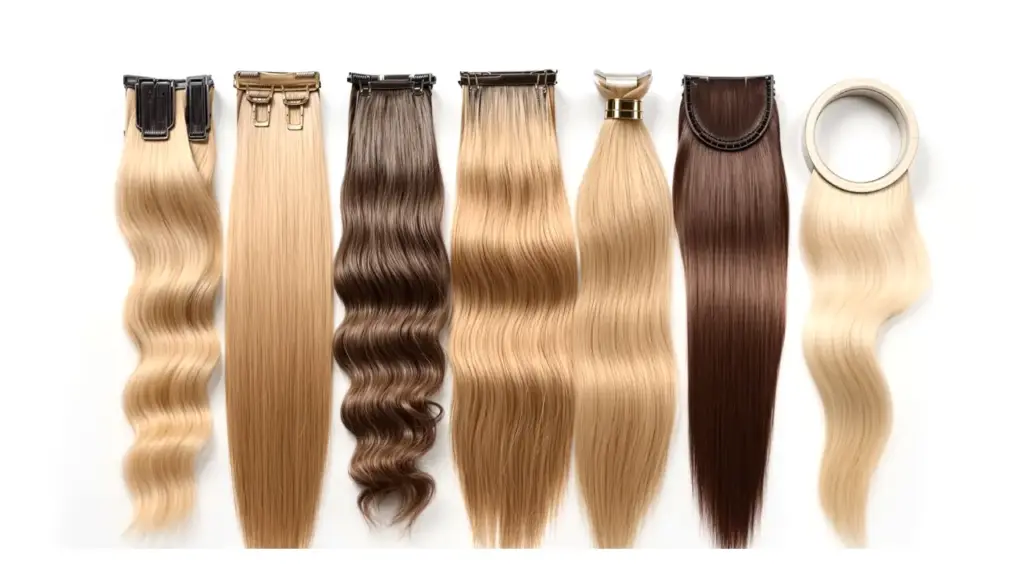
The mechanical construction of the wefts and attachments determines the installation speed and comfort for professional stylists in a salon setting.
-
Weft Stitching: New businesses should request double-drawn hair with a density of 22 stitches per inch for a flat, shed-proof track.
-
Keratin Bonds: Fusion extensions must use 100% Italian Keratin, which has a stable melting point of 130°C and does not crumble under natural scalp oils.
-
Color Accuracy: A "batch match" protocol ensures 98% color consistency across different lengths and textures to prevent mismatched, patchy installations.
Consistency in these manufacturing details allows a new brand to scale marketing efforts with the knowledge that the 1000th customer receives the same quality as the first.
Logistical reliability is a major factor for startups that cannot afford to hold excessive safety stock of over 500kg during the initial launch phase.
"Shipping data from 2025 indicates that vendors with localized distribution hubs in Europe or North America reduce out-of-stock durations by 4.2 days on average."
A supplier's ability to offer low MOQ (Minimum Order Quantity) of 5–10 pieces allows a new business to test market demand without a large capital layout.
Ethical sourcing and social compliance are mandatory requirements as global trade regulations tighten regarding the origin of raw materials and labor practices.
-
Sanitization Protocol: Every shipment must include a Certificate of Fumigation, proving the hair was treated at 70°C for 120 minutes for health standards.
-
Labor Audits: Choosing a partner with a BSCI or Sedex audit ensures the brand is not associated with unethical labor, protecting the company from legal risks.
-
Traceability: High-end suppliers provide a Batch ID for every 50kg, allowing the business to track the hair back to its original collection point.
Communication with the supplier should involve a response time of under 4 hours, ensuring that shipping discrepancies are resolved before they impact the end customer.
"In a study of 300 hair startups, those with a written Quality Level Agreement (QLA) resolved shipping errors 60% faster than those using informal messaging."
This agreement should specify the exact weight tolerances (±2g) and the procedure for handling a batch that fails a standardized wash test or dye test.
Starting with a data-driven approach to sourcing builds a foundation where product performance is a predictable asset for the growth of the business.
If you want to compare product options, read more on the official site.